The Trust Administration Timeline in California: How Long Does It Take?
If you've been named trustee of a loved one's trust, one of your first questions is probably: How long will this take? The truth is, trust administration is not a weekend project. In California, the process usually takes 6 to 12 months, depending on the size of the estate, the types of assets involved, and whether there are any disputes among beneficiaries. This also assumes that the trust requires that the trustee distribute assets outright (as opposed to holding the assets in trust until a specified event).
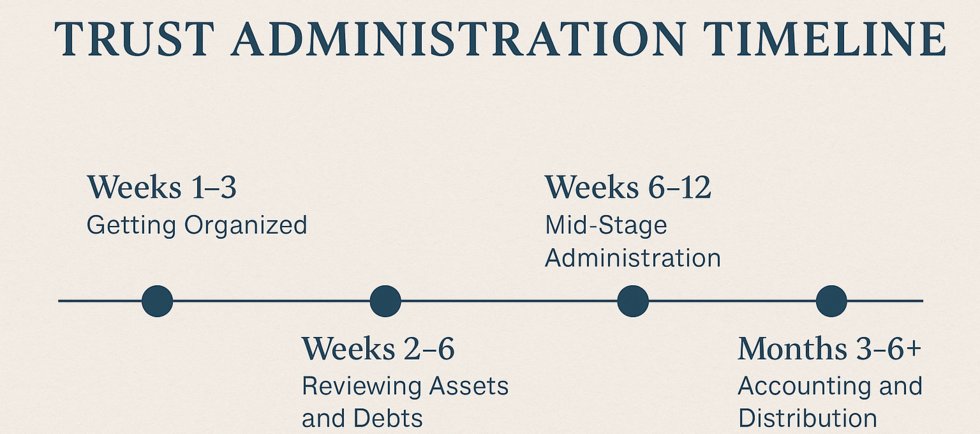
Still, when starting something, it's good to have the finish line in mind, so here is a general overview of the common steps and timeline for administering a trust in California:
Weeks 1–3: Getting Organized
Your first priority is laying the foundation:
-
Read the trust document carefully
-
Secure property (homes, vehicles, valuables, pets)
-
Notify Social Security and forward mail
-
Send required notices to heirs and beneficiaries under Probate Code §16061.7
-
Order multiple certified copies of the death certificate
-
Obtain a Tax ID (EIN) for the trust
-
Open a separate trust bank account
Weeks 2–6: Reviewing Assets and Debts
Once the basics are handled, you'll turn to finances:
-
Confirm what assets are in the trust and check titles
-
Record an Affidavit of Death of Trustee for real property
-
Update insurance coverage
-
Review and address outstanding debts
Weeks 6–12: Mid-Stage Administration
Now you're in the heart of the process:
-
Keep beneficiaries informed with regular updates
-
Work with a CPA on tax filings (final income tax return, trust income taxes, possible estate tax return)
-
Prepare assets for sale, if needed (real estate, vehicles, personal property)
-
Keep meticulous records: every penny in and out of the trust must be tracked
Months 3–6+: Accounting and Distribution
This stage brings everything together:
-
Prepare a formal trust accounting (assets, income, expenses, distributions)
-
Request W-9 forms from beneficiaries for tax purposes
-
Draft a proposed distribution agreement
-
Make final distributions once debts and taxes are paid
-
Close the trust bank account after leaving a small reserve for last expenses
What Can Delay the Process?
Every trust is unique. Delays often happen if:
-
Assets weren't properly titled in the trust (Click here to learn about a second chance at titling assets into a trust)
-
Beneficiaries contest the trust
-
Real estate or business assets must be sold and/or extensively cleaned or repaired before sale
-
Taxes or creditor claims take longer to resolve
Bottom Line
While the average California trust takes about 6 to 12 months to settle, the right planning and legal guidance can keep things moving smoothly.
At Finlay Law Group, we strive to make life's most stressful moments less stressful by providing caring, individualized, and responsive service in trust administration, probate, and estate planning. If you've been named trustee, reach out today — we'll help you stay on track at every step.
Disclaimer: The above information is intended for information purposes alone and is not intended as legal advice. Please consult with counsel before taking any steps in reliance on any of the information contained herein.